Independent sourcing partner

Portable oscilloscope for sale: lock bandwidth, channels, and probes before the quote

LinkScope Sourcing 53 helps a US business buyer turn a portable oscilloscope for sale search into one written brief. Factories then answer the same measurement function, range, channel count, and accessory list. The desk does not stock handhelds and does not publish a street price.

  • Analog bandwidth and sample rate, stated together
  • Input impedance and probe attenuation in the same order
  • Calibration traceability tied to the serial or batch
  • Quantity, destination, and requested timing

Request Factory Quotes Open inquiry labels

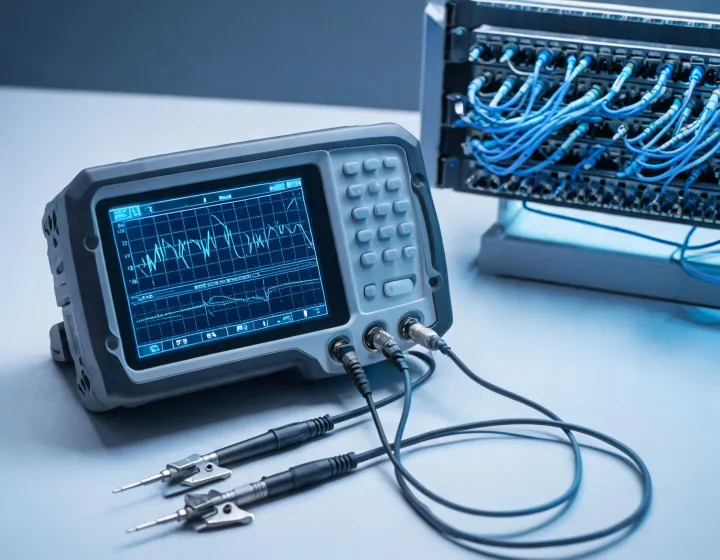
Handheld oscilloscope and passive probes on a telecom bench

Lifecycle questions that change the landed instrument

A portable body can look similar across replies while the support window, the certificate, and the spare probe differ. Read each column as a question for the proposed model, not as a rating this site has already verified.

Stage Ask the factory Typical figure to confirm What stays out of the comparison
Selection Bandwidth, channel count, sample rate, and isolated versus grounded inputs 100 MHz with 1 GSa/s is a common bench pair; confirm both numbers on the datasheet A photo of a screen is not a bandwidth proof
Incoming check Measurement accuracy statement, probe compensation method, and safety category A 1 kHz square wave is a frequent compensation source; ask if it is built in Family marketing copy is not an incoming test record
Use year Calibration traceability interval and who issues the certificate Many procedures request a 12 month interval starting at shipment A blank “calibrated” word without a date
Spares Probe connector mating cycle notes, spare leads, and case Passive probes are often rated near 1 MΩ in parallel with about 15 pF at the scope input Assuming the next probe shares the same compensation range

A single-pole rise-time estimate of 0.35 divided by bandwidth in gigahertz gives about 3.5 ns at 100 MHz. Treat that arithmetic as a cross-check. The datasheet rise time, measured with the stated probe, is the figure to compare. IEEE 802 Ethernet overviews can frame a network question, but they do not set oscilloscope measurement accuracy.

Three inquiry rows inside the same instrument family

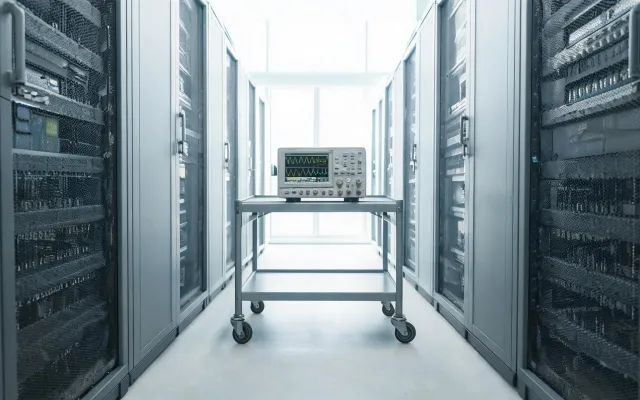
Portable oscilloscope on a rolling cart

Handheld scope body

Record display or logging, battery runtime, and whether the unit is a bench scope with a handle or a battery handheld. Ingress protection matters if the cart leaves the lab. A rack unit switch and its forwarding rate belong on a different RFQ.

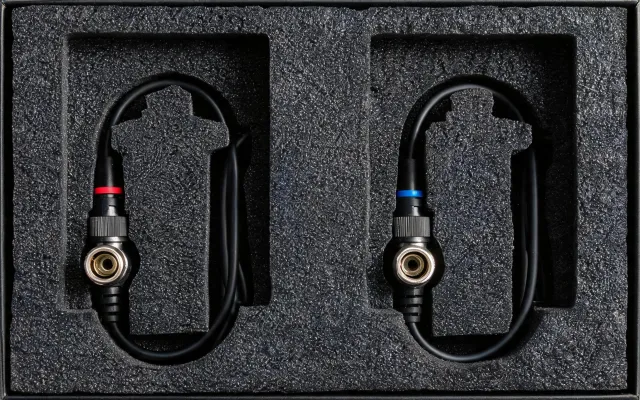
Passive oscilloscope probes with BNC ends

Probe and accessory line

Separate 10:1 and 100:1 attenuation, compensation range, and the voltage the probe is rated to see. Connector mating cycle notes help when crews share one scope. Return loss, VSWR, insertion loss, and optical budget are not probe specifications; they stay on RF and fiber files.

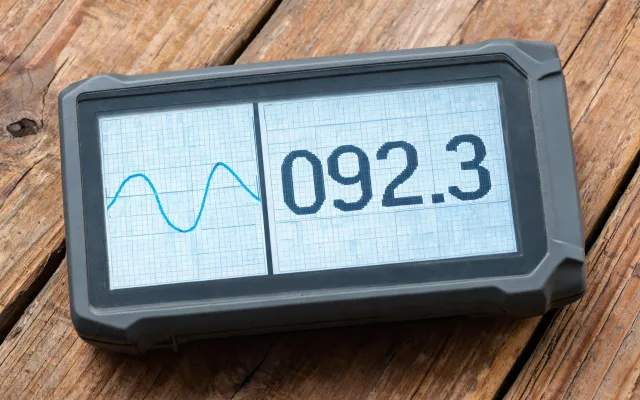
Combo handheld showing a waveform and a meter reading

Combo handheld

A 2-in-1 body can cover a waveform plus a meter range. Ask which function is isolated, which jack is fused, and whether the frequency range of the meter mode matches the job. Power over Ethernet wattage and MIMO radio settings are outside this family.

Read the combo quote method before mixing a scope-body price with a scope-plus-meter price.

Evidence questions buyers ask before a factory call

Each answer is a sourcing step. None of them is a test result this desk has published for a named model.

What belongs in the opening brief?

Measurement function, analog bandwidth, channel count, sample rate, input category, probe or accessory scope, quantity, US destination, and requested timing. Add an optional budget with currency and a per-unit or whole-order basis if you have a ceiling. You do not need a prior quote.

How does supplier matching work here?

The desk sends the same brief to factories that can quote the family. Each reply must name the manufacturer, model, and configuration. A compatible probe is acceptable when you allow it in writing. An OEM-coded probe may track the scope maker support notes more closely. Both paths still need the datasheet for the exact item.

New instrument or refurbished instrument?

New stock usually makes the probe condition and the certificate start date easier to read. Refurbished stock can cover a discontinued handheld when the seller states remaining calibration interval, cosmetic grade, and which accessories are original. The preference is yours. It is not a rating of the seller.

Which limits should stay visible?

A handheld will not settle switching capacity, receiver sensitivity, transmit power, wavelength, dispersion, or gain. Those terms mark other telecom files. Safety category under IEC 61010-1, such as CAT II or CAT III at a stated voltage, must be confirmed for the scope and the probe together. A 100 MHz label does not imply CAT III 600 V.
Send the spec sheet questions with the quantity

Background: a contractor in Ohio listed “portable scope, two channels, soon.” Process: the desk asked for 100 MHz versus 200 MHz, whether a 10:1 probe was included, the destination state, and USD per unit versus whole-order freight. Result: two factories answered on one grid, and the lower body price stopped looking lower after the missing probe and a separate 12 month certificate line were added.

Compare factory quotations on the same configuration. LinkScope Sourcing 53 does not claim a market discount. Read the procurement note if you want the checklist in long form.

Factory quote request