RFQ planner

Hantek oscilloscope probe requests still need attenuation, bandwidth, and the host scope

Buyers type “hantek oscilloscope probe” when a handheld already on the bench uses that name. LinkScope Sourcing 53 is an independent sourcing partner. The desk does not speak for that manufacturer and does not treat the search string as a complete specification or as a supply authorization.

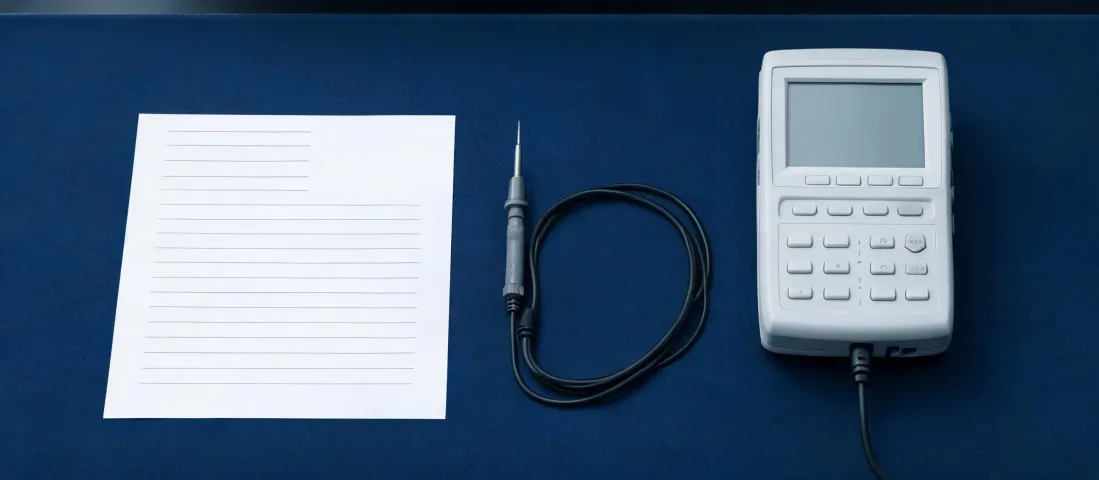
Planner sheet beside a generic probe and handheld scope

Fill the blanks before an alternative is accepted

Record the host bandwidth. A 100 MHz handheld and a 200 MHz handheld do not ask the same probe. Sample rate, such as 1 GSa/s, stays on the scope line. Probe bandwidth should be requested at or above the scope bandwidth you care about. Input impedance near 1 MΩ with about 15 pF is the usual front-end clue; the probe sheet must state the capacitive loading.

Compensation is the practical fork. Many handhelds offer a square wave near 1 kHz. If the probe compensation range does not cover that source, the edge you see is the probe, not the circuit. Write an incoming check: adjust the probe, capture the flat top, and file the photo with the model numbers. That check is a buyer method. It is not a certificate.

Measurement accuracy and calibration traceability split across two objects. The scope certificate often covers vertical gain and timebase. The probe check often covers DC attenuation. Ask which document you will receive, who issues it, and whether a 12 month interval is measured from shipment. Frequency range wording should not be copied from a radio datasheet onto a passive probe.

Safety category under IEC 61010-1 is paired. State the voltage the probe may touch and ask the factory which category applies to that probe with your scope. A 100:1 ring does not create CAT III by itself. Ingress protection and connector mating cycle notes matter for a shared cart. Display or logging and runtime belong to the handheld body if you are buying both in one order.

Trade-offs to settle in the planner

Maker-listed probe

One side of the compatible-module dispute, translated to accessories: staying on the scope maker probe list can reduce questions about the compensation screwdriver and the readout pin. The opposing cost is a narrower factory set and a unit price that may sit higher before freight. Evidence required either way: current datasheet, attenuation, bandwidth, and the exact host model.

Compatible probe

The other side: a compatible probe can be quoted by more factories when you allow it. The opposing risk is a compensation range or a ground-lead inductance that the procedure did not test. Accept an alternative after the datasheet numbers and a sample edge check, not after a similar photo. This page does not rank either side.

New versus refurbished

New probes make tip and lead condition easier to describe. Refurbished probes can fill a discontinued accessory if remaining calibration interval, replaced parts, and included tips are written. A short certificate can remove the apparent unit-price gap. Keep the condition column visible beside USD per unit and whole-order freight.

What the planner will not decide

This planner prices the probe and the handheld timebase. Ask for bandwidth, attenuation, and the input impedance with the probe attached. A 2-in-1 handheld quote is a different page when the meter jacks are in scope.

Background: a field team already owned a handheld and searched the probe brand string after a ground lead failed. Process: the planner captured host bandwidth of 100 MHz, a request for two 10:1 probes plus one 100:1 probe, destination in Texas, quantity, and an undecided supplier preference with a USD per-unit ceiling. Result: factories answered attenuation and compensation before anyone treated the brand word as a closed specification. Review inquiry labels or voltage jobs if the 100:1 line is the real need.

Move the planner into a factory request

Copy the open choices into the form. There is no upload and no countdown. Optional budget and supplier preference merge into the requirement text when the browser submits. Without JavaScript, write those lines in the box yourself.